
Aviation autonomy
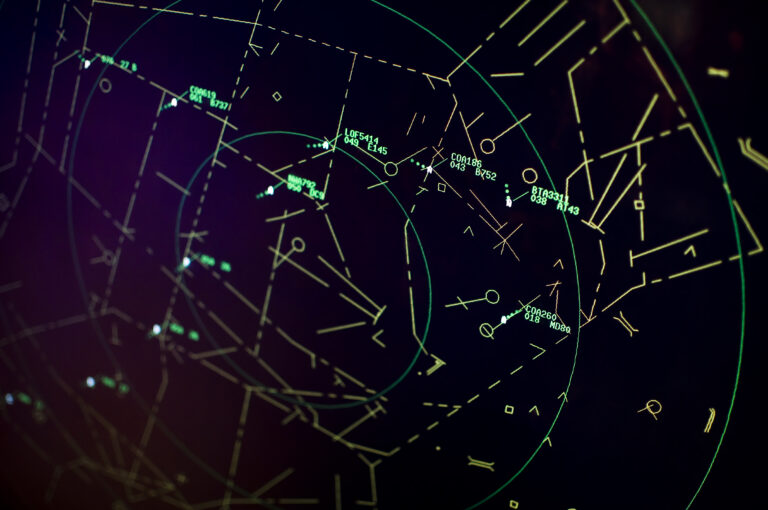
The Law Commission has published the final report of its review into aviation autonomy.
Problem (Back to top)
Automation is already heavily used in aviation today. Recent breakthroughs have seen the development of new, innovative autonomous and highly automated systems and vehicles. These include drones, as well as advanced air mobility vehicles, such as vertical take-off and landing (VTOL) aircraft, which can provide short journeys for a small number of people.
Increased automation has the potential to deliver substantial benefits to the entire aviation system, UK industry and the public. To realise these benefits, the UK’s legislative and regulatory framework needs to be sufficiently agile to facilitate innovation while being robust enough to maintain the sector’s high safety standards.
While there is a legal framework in place which has governed the use of drones to date, there are anticipated developments in industry – such as passenger-carrying services – which mean that changes and additions to the current law are required.
Project (Back to top)
With advances in uncrewed flight in mind, we were asked by the Department for Transport and the Civil Aviation Authority to review existing legislation and to identify any gaps and uncertainties in the law, and any barriers to safe innovation which could be addressed through law reform. The three-year review was partly funded by UK Research & Innovation (UKRI) through the Future Flight Challenge.
Our recommendations for reform are based on proposals set out in our two consultation papers. In our first consultation paper published in February 2024 we considered the roles and responsibilities of remote pilots and operators of two forms of uncrewed aircraft: drones and vertical take off and landing (VTOL) aircraft. In our second consultation paper, published in April 2025, we made provisional proposals relating to the provision of air traffic management and air navigation services (ATM/ANS) to uncrewed aircraft.
Our recommendations for reform
Our final report recommends targeted changes to the current legal framework to ensure that remotely piloted and autonomous uncrewed aircraft systems (UAS) – such as drones – can operate with equivalent levels of safety to crewed flight. Key recommendations include:
• Clear legal definitions and harmonisation of terminology across legislation.
• Legislative change to enable the provision of traffic management services to UAS.
• Measures to safeguard passengers when there is no pilot, and potentially no cabin crew, on board.
• Reallocation of pilot responsibilities for fully autonomous operations.
• Updates to the criminal law, including modernizing the law on hijacking.
Next steps (Back to top)
We published our final report on 20 May 2026. It is now for Government to review and consider our recommendations for reform.
Documents (Back to top)
Report
Ymreolaeth Ym Maes Hedfan: Crynodeb O’r Adroddiad
Aviation Autonomy: Impact Assessment
Consultation papers
Consultation 2
Responses to second consulation
Consultation 1
Consultation, summary and overview
Awtonomi ym maes hedfan: crynodeb o’r papur ymgynghori a trosolwg
Responses to the first consultation
Background information
Contact (Back to top)
Contact us for more information.